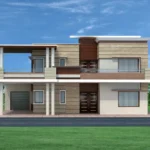

Proposed Two-Storey Dwelling | Hereford Street, Box Hill | P Brar & S Brar
Site Analysis & Planning Constraints
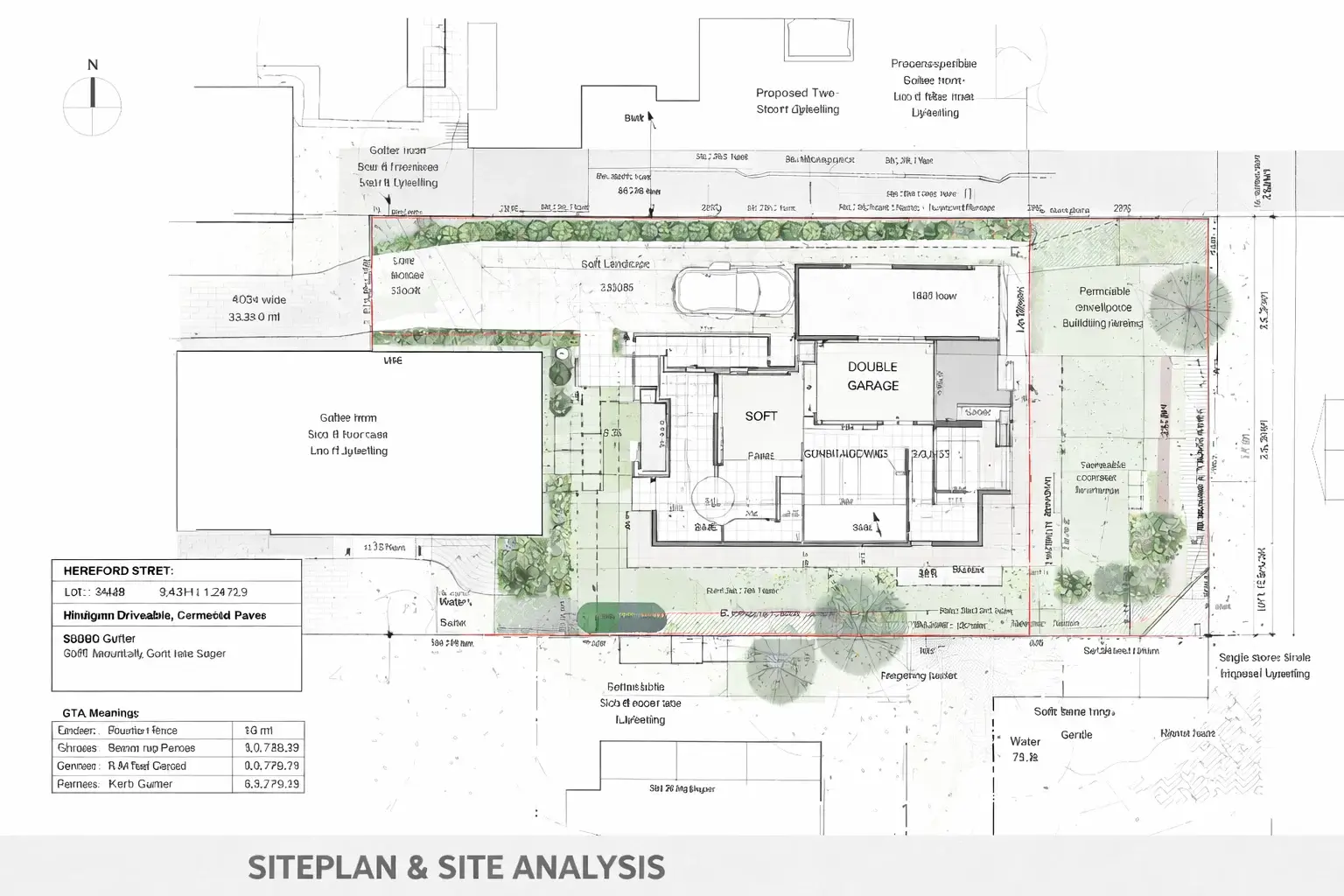
The initial stage focused on understanding the site’s orientation, setbacks, access points, and surrounding context to inform a compliant and efficient design response. Key challenges included optimising building placement within planning controls while maintaining strong street presentation and functional outdoor spaces. Solar orientation, driveway access, and neighbouring impacts were carefully assessed to guide early massing and layout decisions.
Concept Design & Spatial Planning
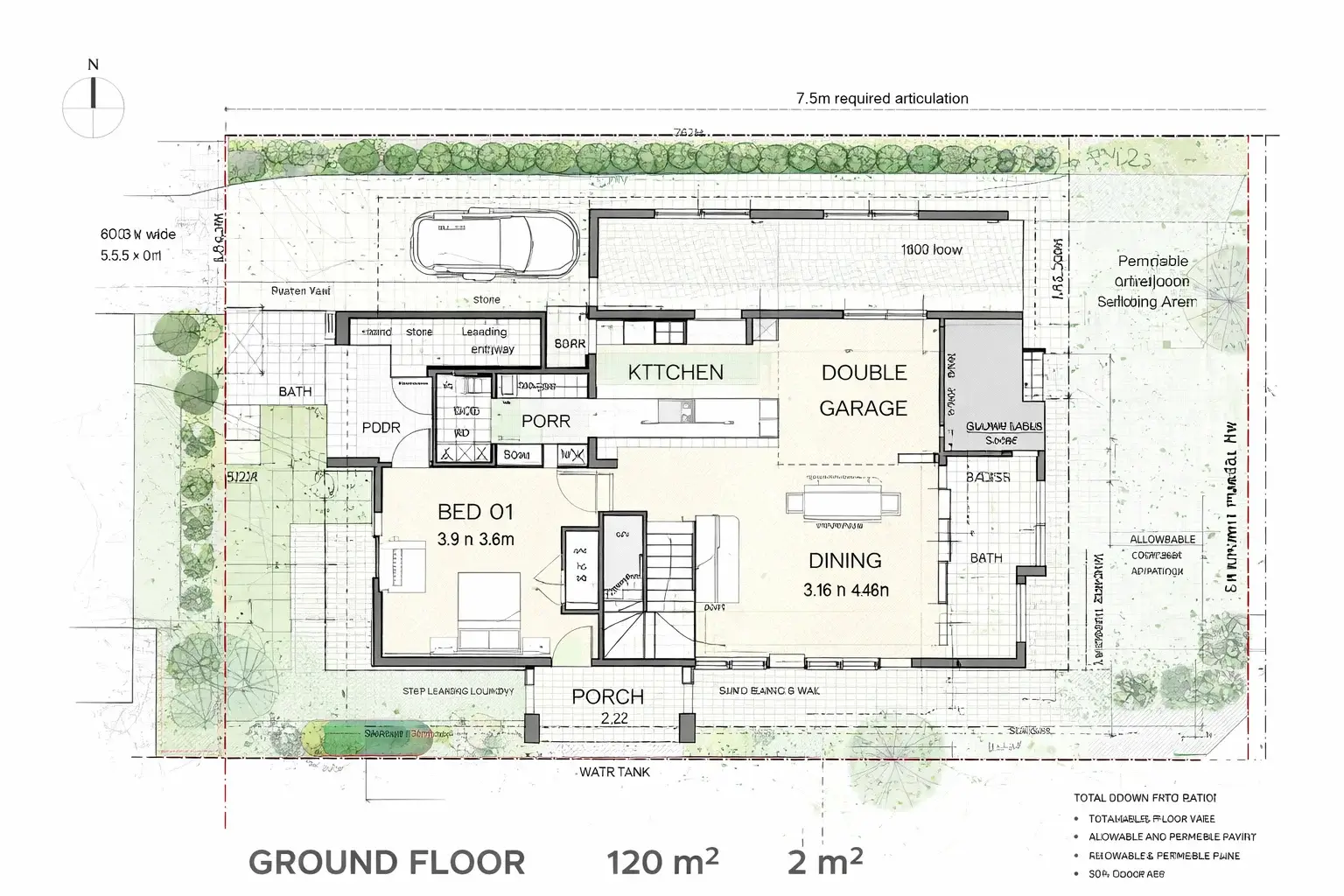
The ground floor was designed to balance daily living needs with privacy and accessibility, integrating open-plan living areas, garage access, and guest accommodation. A major challenge was achieving smooth internal circulation while responding to articulation zones and setback requirements. Spatial efficiency and clear zoning were prioritised to enhance functionality without compromising compliance.
Façade Design & Architectural Character
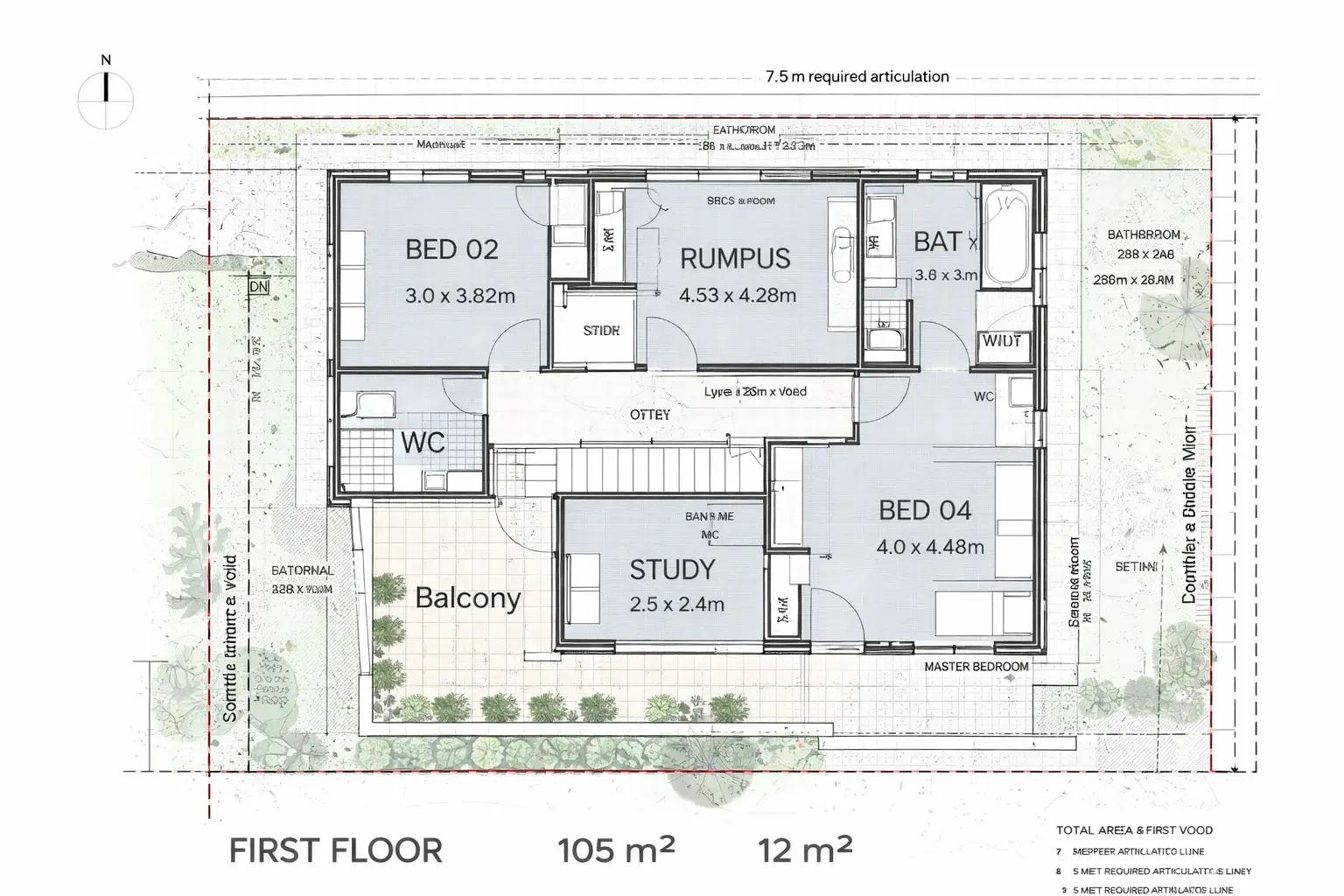
The first-floor layout focused on accommodating private family spaces, including bedrooms, rumpus, study, and balcony areas. Managing overlooking, articulation setbacks, and internal voids posed key challenges while maintaining generous room sizes and daylight access. The design carefully balances privacy, comfort, and visual connection to outdoor spaces.
Compliance, Sustainability & Technical Resolution
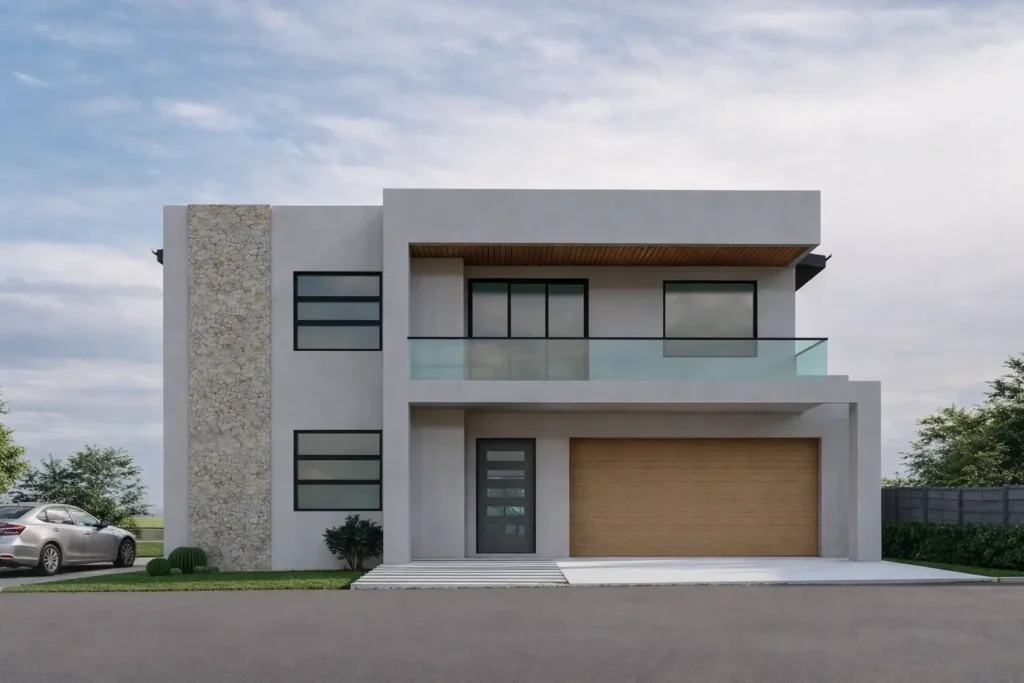
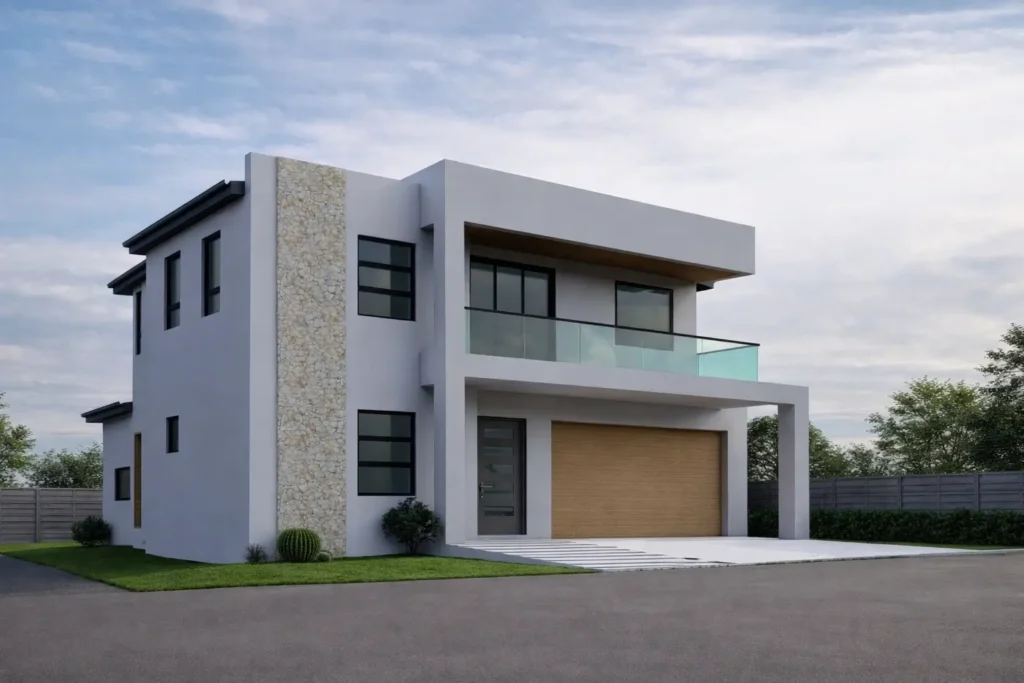
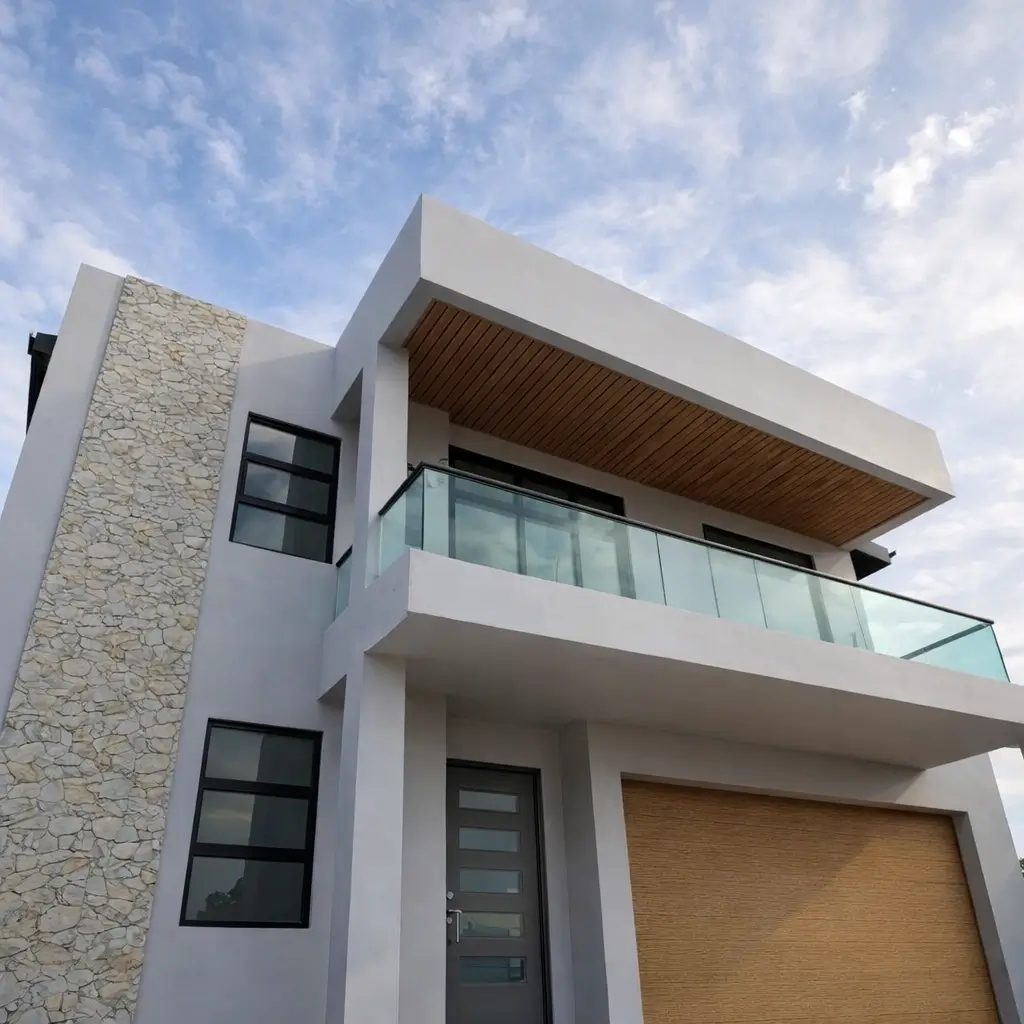
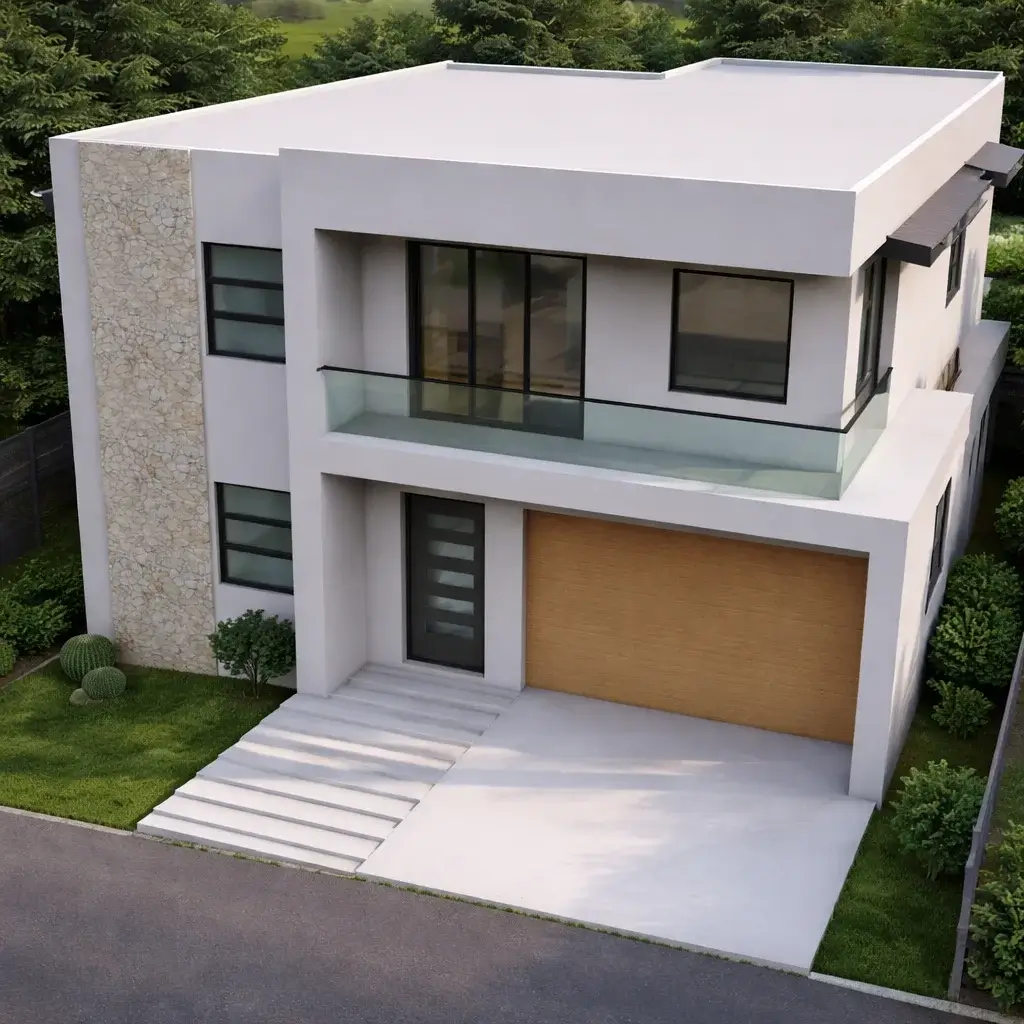
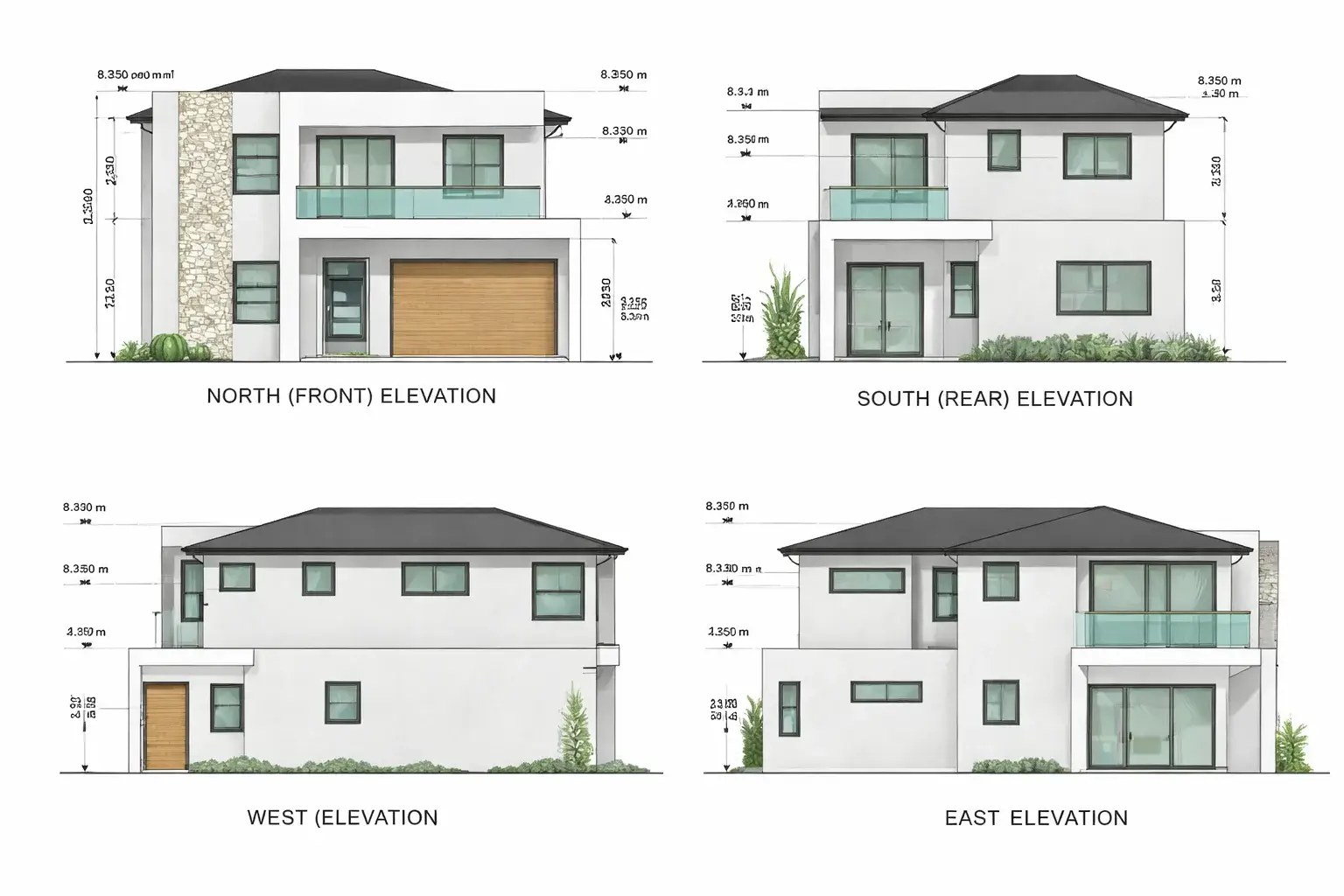
Developing the external form required careful coordination of height limits, roof design, and façade articulation to achieve a contemporary appearance within statutory controls. The challenge was to create visual interest using clean lines, material contrast, and proportions while complying with the 8.5m height plane and setback regulations.
Detailed Documentation & Approval Strategy
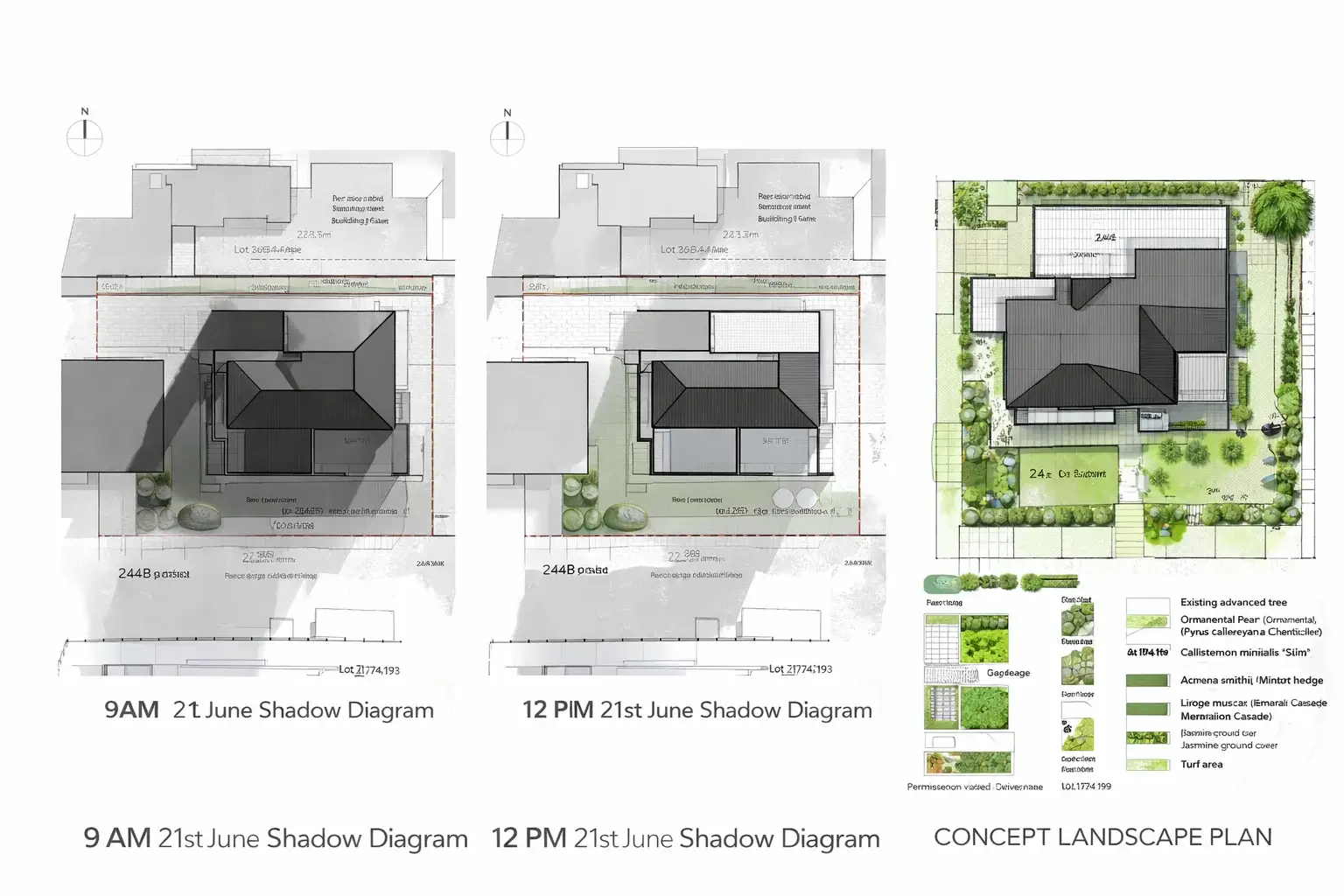
The final stage addressed environmental performance, shadow impact, landscape integration, and overall compliance. Shadow diagrams ensured minimal impact on neighbouring properties, while landscape planning enhanced privacy and street appeal. Coordinating BASIX requirements, shadow controls, and landscape ratios was a key challenge before final approval submission.