
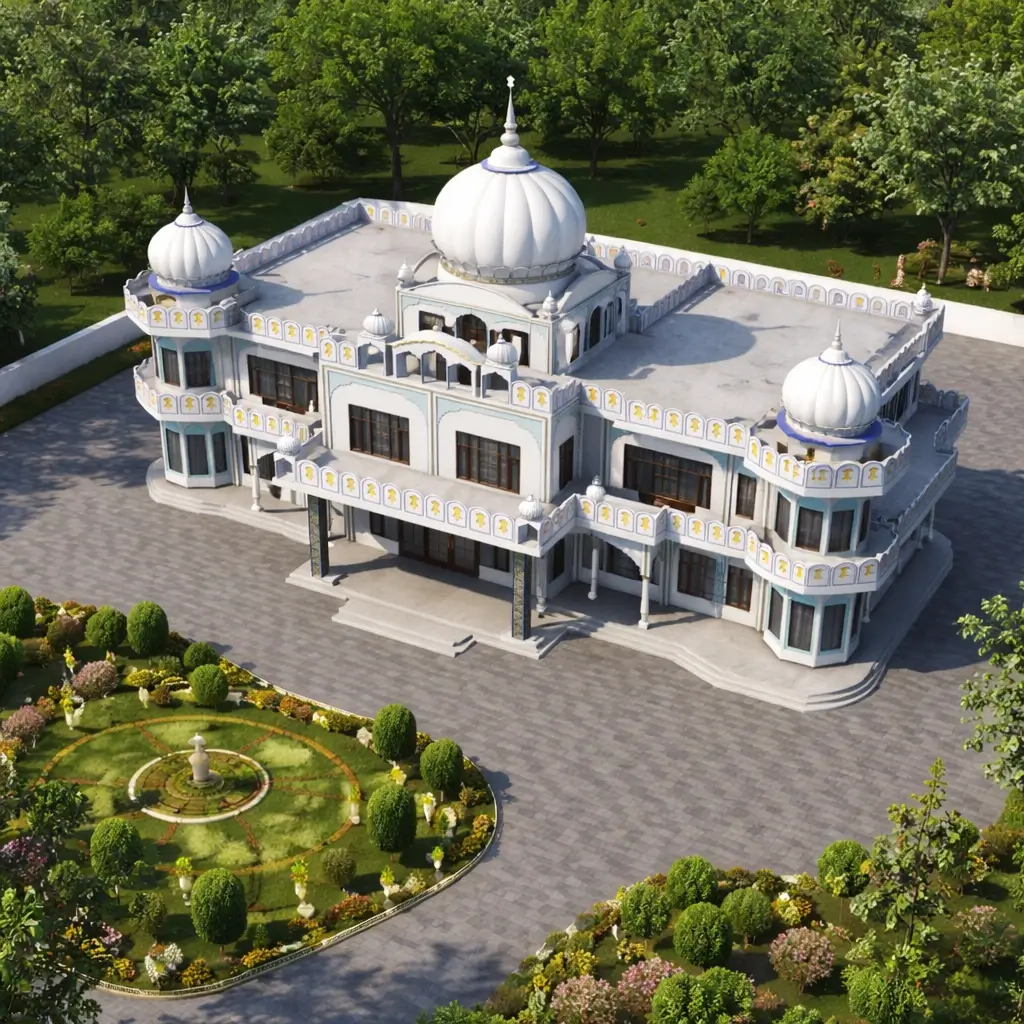
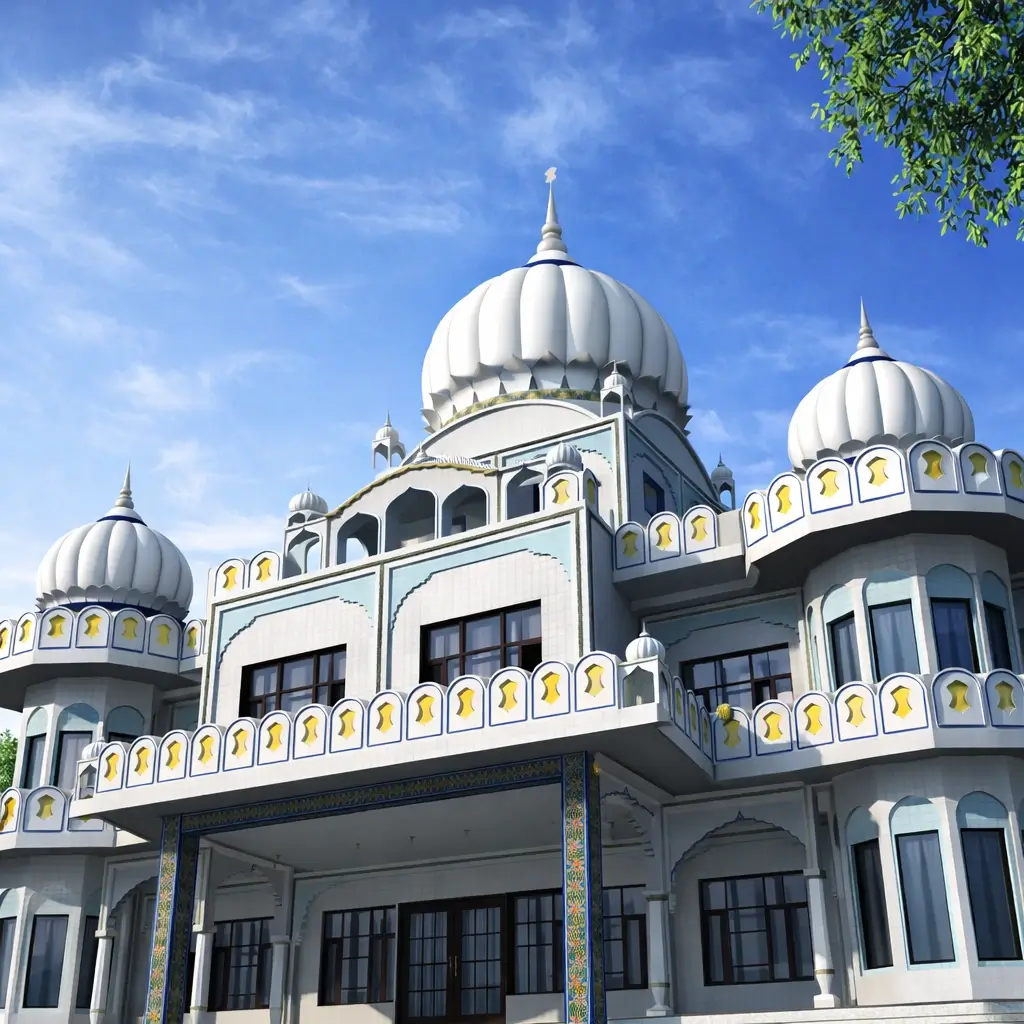
Proposed Gurudwara Sahib Architectural Design | Fatehpur, Nakodar – Jalandhar
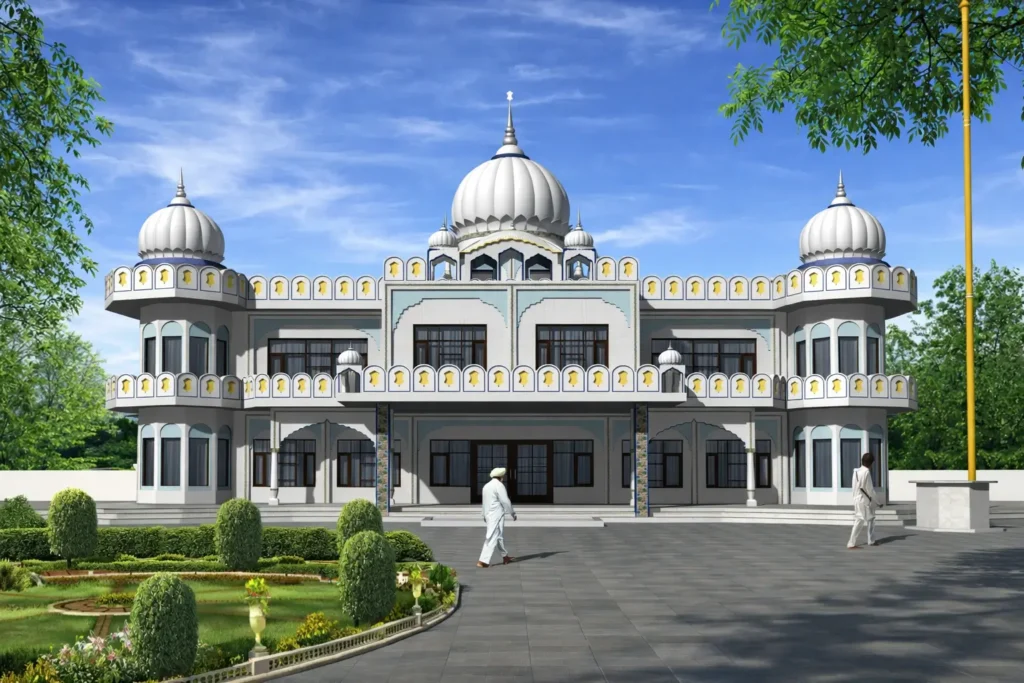
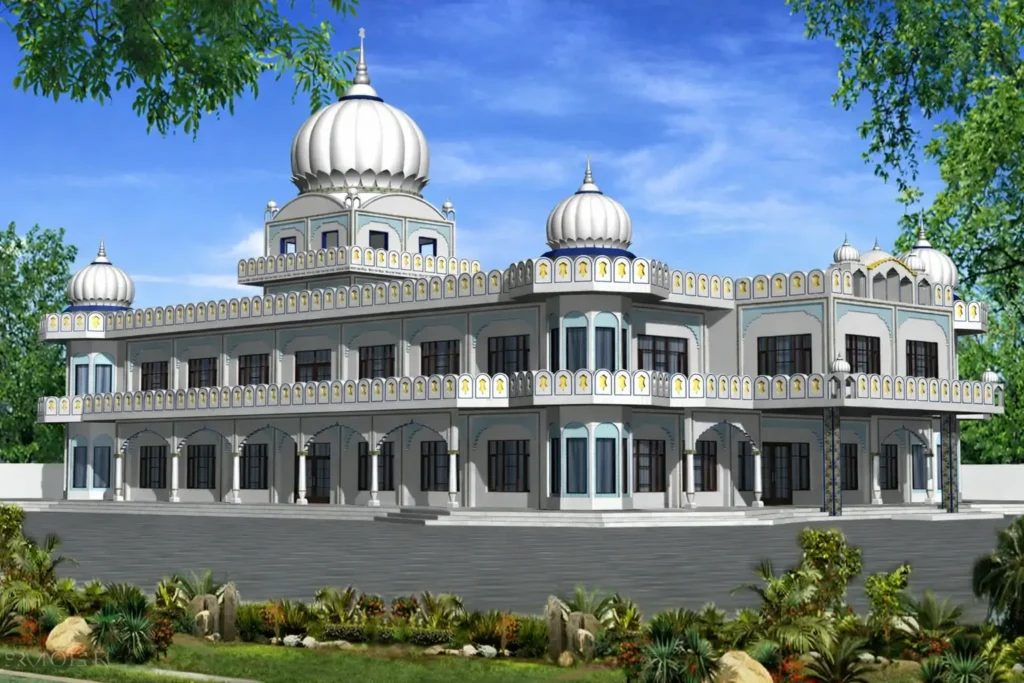
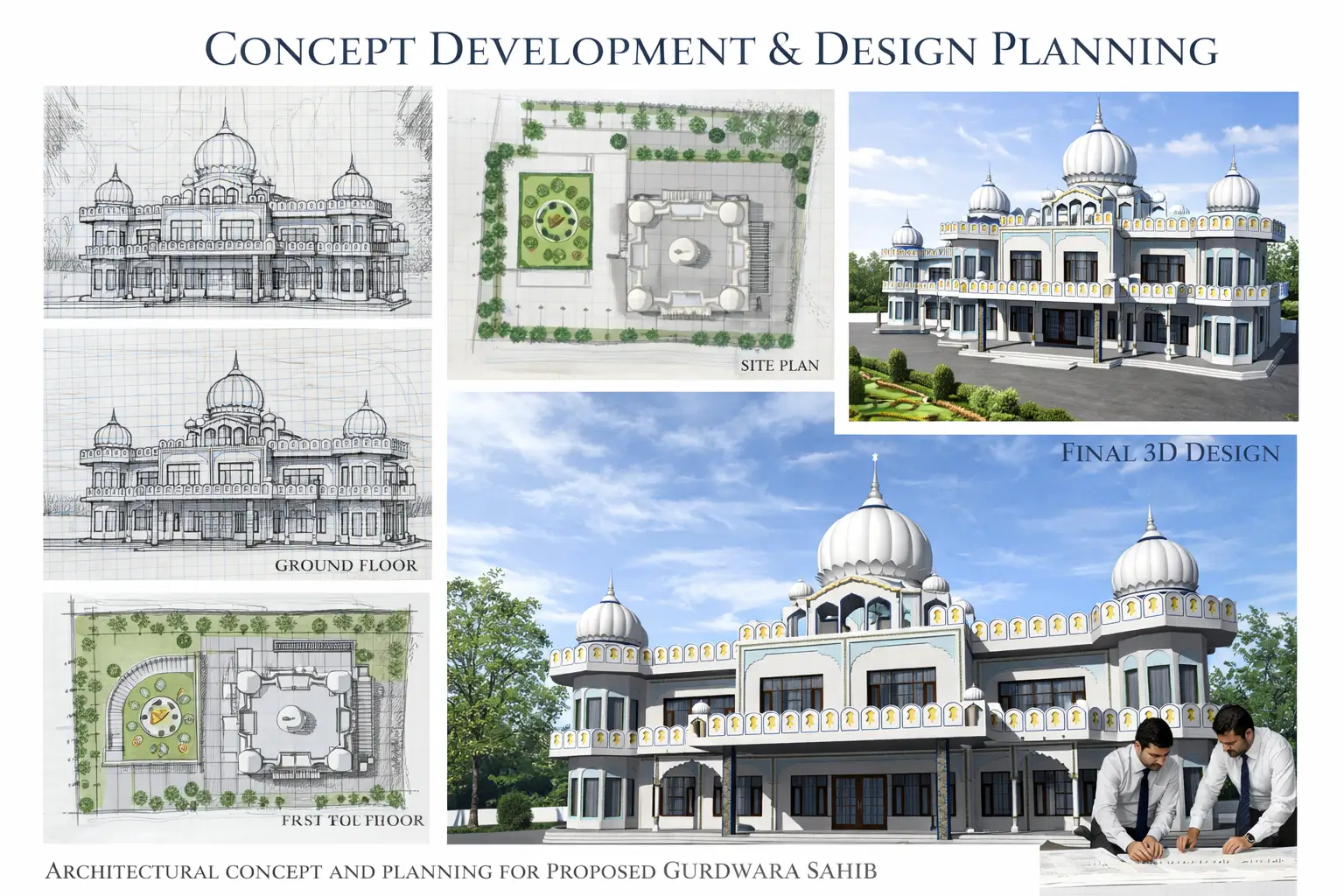
Concept Development & Design Planning
The initial stage focused on understanding religious requirements, spatial hierarchy, and traditional Sikh architectural elements. Conceptual massing was developed around symmetry, central dome prominence, and ceremonial entry sequences. Challenges included balancing spiritual symbolism with functional planning, ensuring adequate congregation space, and aligning the design with local bylaws and site constraints without compromising architectural intent.
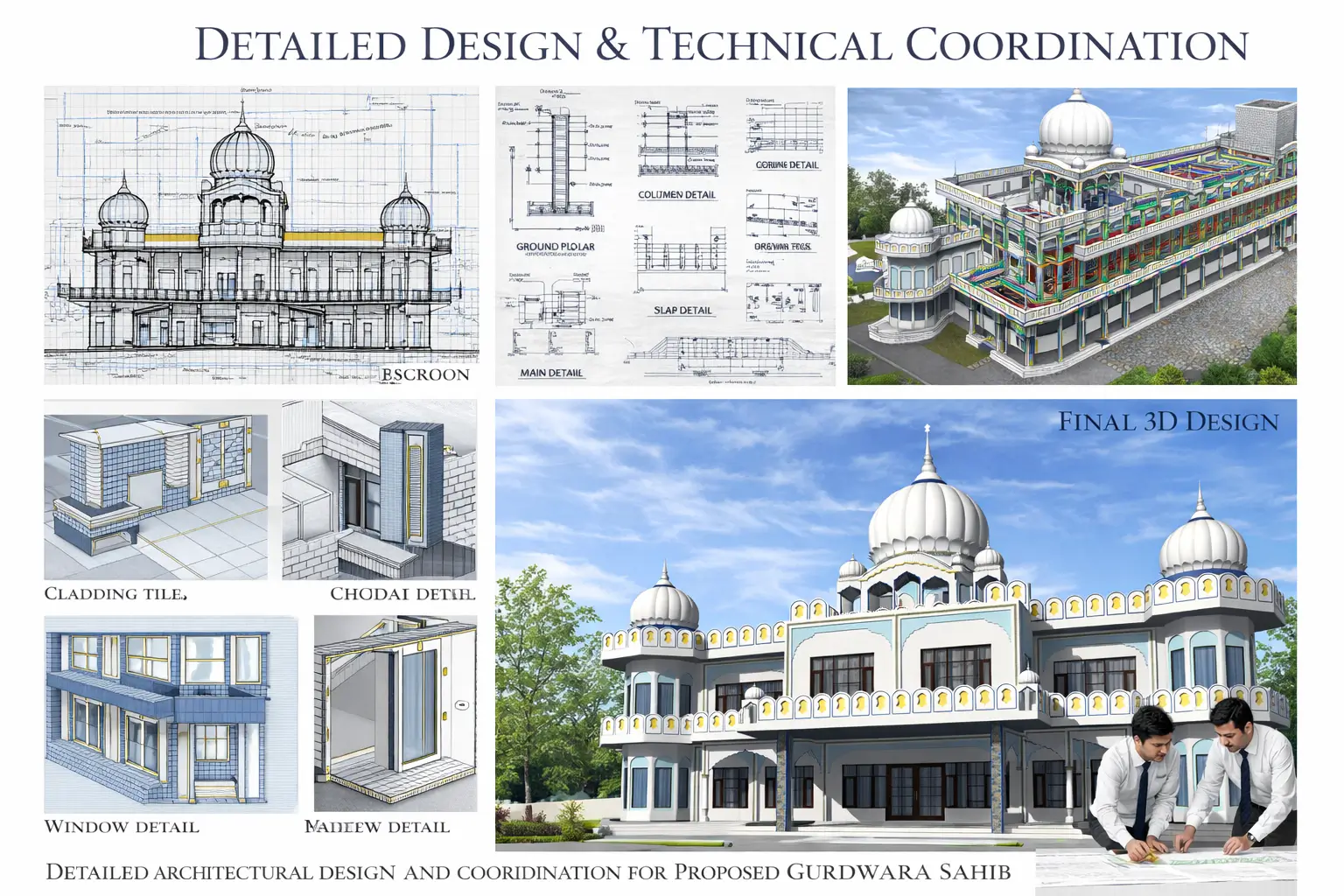
Detailed Design & Technical Coordination
This phase involved detailed architectural drawings, façade articulation, dome proportions, and material selection to maintain authenticity and durability. Coordination with structural and services consultants was essential to integrate modern construction systems seamlessly. Major challenges included achieving precise ornamental detailing, managing structural complexity of domes, and maintaining design consistency across elevations.
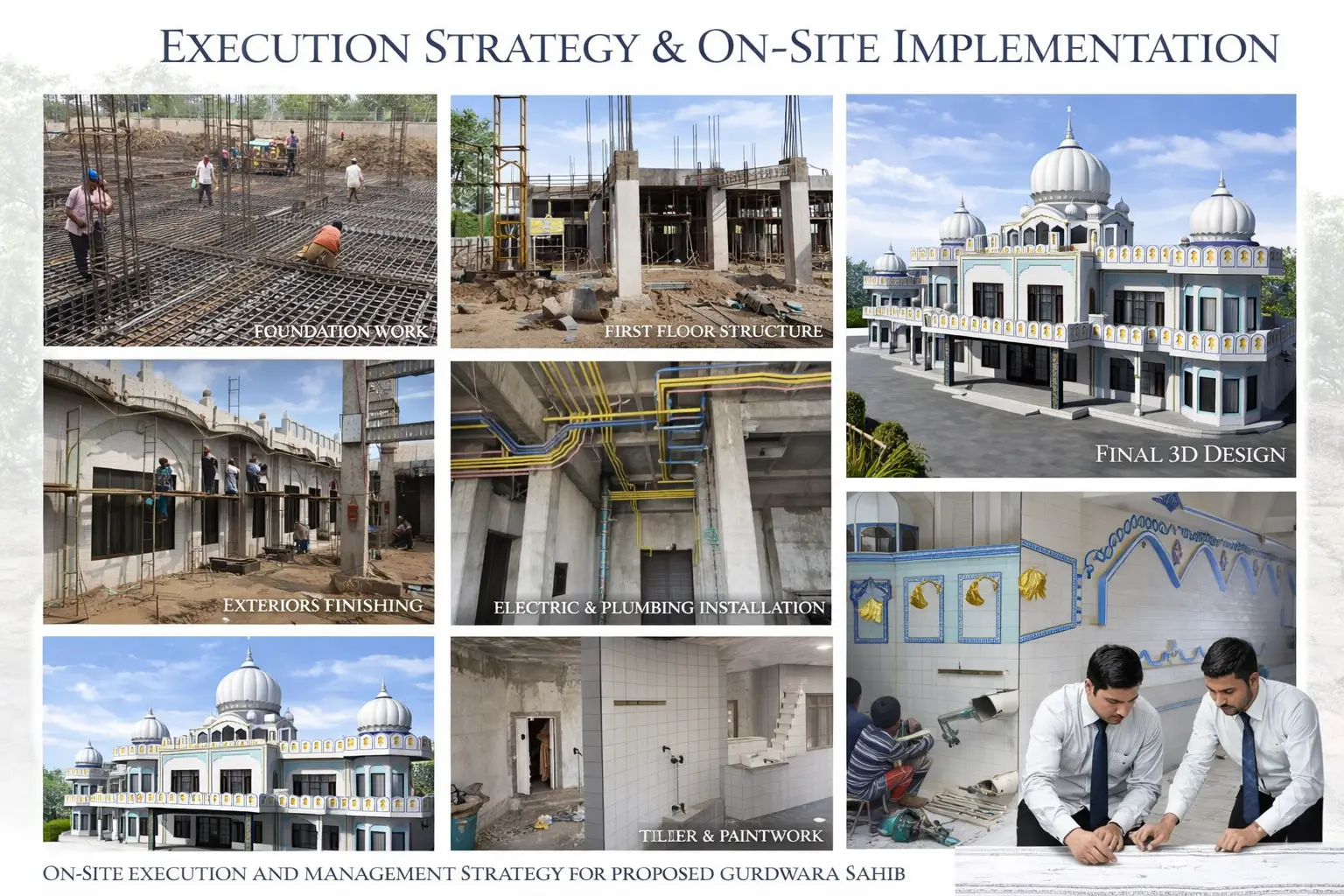
Execution Strategy & On-Site Implementation
The final stage addressed construction sequencing, detailing execution methods, and quality control strategies. Attention was given to workmanship, material finishes, and alignment of decorative elements on site. Challenges included skilled labor availability for traditional detailing, maintaining dimensional accuracy during construction, and adapting design details to on-ground conditions without affecting the overall architectural character.